The Unseen Engine: Demystifying the GSA Site List for Smarter Link Building
In the vast, often bewildering world of Search Engine Optimization (SEO), few tools are as simultaneously powerful and misunderstood as GSA Search Engine Ranker. For those in the know, it’s a formidable automation tool. For everyone else, it’s a mysterious black box. But if there’s one component within that box that truly separates the successful campaigns from the disastrous ones, it’s the humble, yet critical, GSA site list.
Think of it not as a simple text file, but as the beating heart of your entire operation. It’s the curated guest list for an exclusive party, the battle plan for a military campaign, the recipe for a complex dish. Get it right, and you create a powerful, flowing stream of backlinks. Get it wrong, and you risk everything from wasted resources to a penalized website.
So, let’s pull back the curtain. This isn’t a technical manual; it’s a conversation about the philosophy and strategy behind managing your GSA link list effectively, with a human touch.
What Exactly Is a GSA Site List?
At its most basic, a GSA SER site list is a simple text file (.txt) that contains a list of URLs. GSA Search Engine Ranker reads this file and attempts to create backlinks on those specific websites. It’s a way to tell the software, “Don’t go wandering aimlessly across the internet. Focus your energy here, on these specific targets.”
But this simple definition belies its immense importance. The quality of the URLs in this list directly dictates the quality of your entire link-building campaign. This is the core principle that every GSA user must internalize.
You can break down the use of site lists into three primary functions:
-
Targeting: Feeding GSA a list of high-quality, relevant websites (like blogs in your niche that accept comments or guest posts) to build powerful, contextual links.
-
Exclusion (The “Never List”): Providing a list of sites you want to avoid at all costs. This includes spammy networks, dangerous sites, or platforms that have previously banned you.
-
Verification Platforms: Specifying a list of sites like Gmail, Yahoo, or Outlook for the software to use when creating accounts to verify links.
The magic—and the challenge—lies in the curation.
The Art of Curating Your Master List
Anyone can download a massive, pre-compiled GSA site list from a forum and hit “start.” This is the SEO equivalent of throwing spaghetti at a wall and hoping something sticks. It’s noisy, messy, and ultimately, ineffective. The professionals, however, are artisans. They understand that a smaller, highly relevant list will always outperform a gigantic, generic one.
Here’s how to build your list with intention:
1. Seek Relevance, Not Just Quantity:
Your first instinct might be to amass millions of URLs. Resist it. Instead, think like your target audience. Where do they hang out online? What blogs do they read? What forums do they participate in? Use advanced search operators (Google Dorks) to find these places. For example, searching for "your keyword" "leave a comment" or "your keyword" "powered by WordPress" can unearth golden opportunities. A list of 1,000 highly relevant sites is a treasure trove. A list of 1 million irrelevant sites is digital clutter.
2. Prioritize Quality Indicators:
As you gather URLs, be a detective. Look for signs of a good target:
-
Domain Authority (DA) / Trust Flow (TF): While not the only metric, a site with a decent DA or TF is generally better than one with a score of zero.
-
Content Quality: Does the site have well-written, coherent articles? Or is it a jumbled mess of spun content and ads?
-
Spam Score: Use tools like Moz or Ahrefs to check if the site has a high spam score. If it does, steer clear.
-
Engagement: Are there real comments on the blog posts? Is there social sharing? This indicates a living, breathing website, not a ghost town.
3. The Power of the “Verified” List:
One of GSA’s most brilliant features is its ability to export a list of successfully verified links. After every campaign, you can export the URLs where your link was successfully placed. This becomes your verified GSA link list—a proven, battle-tested asset. This list is pure gold. You can reuse it for future campaigns, share it (if you’re feeling generous), or use it to analyze what types of sites are working best for you.
The Pitfalls of a Poorly Managed List
Ignoring the importance of your GSA SER site list is like ignoring the maintenance schedule for a high-performance car. It might run for a while, but eventually, it will break down catastrophically.
-
The Sandbox Trap: Building links too quickly to low-quality, spammy sites is a surefire way to get your website sandboxed by Google. Your rankings will vanish, and recovery is a long, arduous process. Your site list is your primary defense against this.
-
Wasted Resources: GSA consumes time, proxies, and captcha credits. Sending it to a dead or irrelevant list is like burning money. A refined list ensures your resources are spent on viable targets, maximizing your Return on Investment (ROI).
-
Brand Damage: Having your website linked from pornographic, violent, or otherwise malicious sites doesn’t just hurt your SEO; it can damage your brand’s reputation if a potential customer happens to see it.
Beyond the Basics: Advanced List Management
Once you have the fundamentals down, you can start getting strategic. This is where you move from being a user to being a maestro.
1. Tiered Link Building:
This is the secret sauce for safe and powerful SEO. Instead of pointing all your GSA-built links directly to your money site (your main website), you create a structure.
-
Tier 1: These are your highest-quality links. Think guest posts on authoritative sites, web 2.0 properties like Medium.com, and niche-relevant blog comments. You would create a premium GSA site list for these and point them directly to your money site.
-
Tier 2: This is where GSA truly shines. You create a new campaign and point it to your Tier 1 links. You use a larger, more diverse GSA link list to build links to the pages that are linking to you. This “powers up” your Tier 1 links, making them stronger and more resilient.
-
Tier 3: You can even create a third tier to point to your Tier 2 links, creating a powerful, self-reinforcing link pyramid.
2. Contextual and Thematic Lists:
Don’t just have one giant “main list.” Get organized. Create separate lists for different purposes:
-
Blog_Comment_Sites_Technology.txt -
Wiki_Sites_Health.txt -
Social_Bookmarking_General.txt -
Article_Directory_List.txt
This allows for hyper-targeted campaigns. When you post a new article about “the best running shoes,” you can fire up GSA with your Blog_Comment_Sites_Fitness.txt list for maximum relevance.
3. The Living List: Constant Pruning and Nourishment
Your GSA site list is not a “set it and forget it” asset. It’s a living document. The internet is constantly changing. Websites go offline, stop accepting links, or get overrun by spam.
-
Regularly Prune: Use tools to check the health of the sites in your list. Remove dead links, sites that now have a high spam score, or those that no-follow all their links.
-
Consistently Nourish: Always be on the hunt for new, high-quality targets. Dedicate time each week to prospecting and adding fresh URLs to your lists.
A Word on Sourcing Your Lists
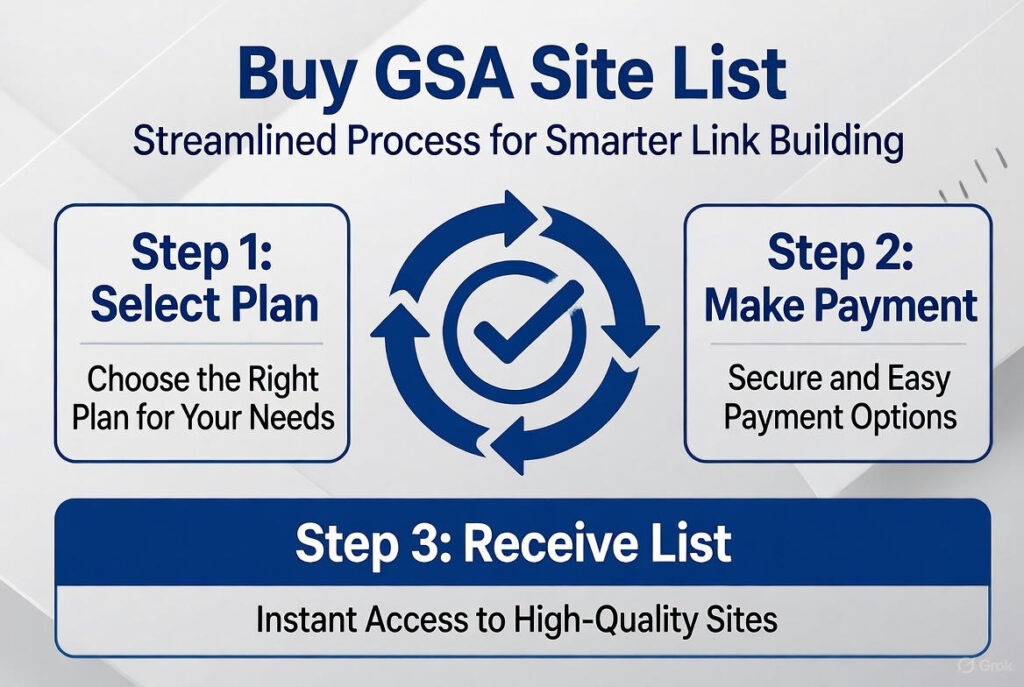
You’ll find many places online selling massive “updated” GSA site list packs. Be cautious. While some can be a decent starting point for Tier 2 or Tier 3 links, they should never be the foundation of your Tier 1 strategy. The best lists are the ones you build yourself. They are unique to your niche and your strategy, making them far more valuable and effective than any generic list you can buy.
Conclusion: The Human in the Machine
GSA Search Engine Ranker is a tool of immense power, but it lacks judgment. It doesn’t understand nuance, relevance, or reputation. It simply executes commands. The GSA SER site list is the primary interface through which we impart our human judgment, our strategy, and our understanding of quality onto the software.
It’s the difference between being a lumberjack with a chainsaw, wildly cutting down everything in sight, and a master carpenter using that same chainsaw to carefully select and shape wood into a beautiful piece of furniture. The tool is the same, but the intention, the plan, and the guiding hand make all the difference.
So, invest your time not just in running the software, but in crafting the list that guides it. Build it with care, manage it with diligence, and use it with strategy. That is how you transform GSA from a blunt instrument into a precision engine for sustainable growth.